
Chickens are one of the most common birds in the world, raised for eggs, meat, and even companionship. Despite their popularity, many people do not know the correct chicken scientific name or how chickens are classified biologically.
Understanding this scientific information helps farmers, students, and researchers communicate clearly and accurately.
In this guide, you’ll learn the scientific name of a hen, chicken species classification, origin, evolution, and why scientific naming matters worldwide.
What Is the Scientific Name for a Hen?
The scientific name for a hen is Gallus gallus domesticus.
This name applies to:
- Hens (female chickens)
- Roosters (male chickens)
- Chicks (young chickens)
Scientific classification does not change based on gender. Both hens and roosters belong to the same species and subspecies.
Meaning of the Scientific Name:
- Gallus – Refers to junglefowl
- Gallus gallus – The red junglefowl, the wild ancestor
- Domesticus – Indicates domestication by humans
Scientific Classification of Chicken and Its Species
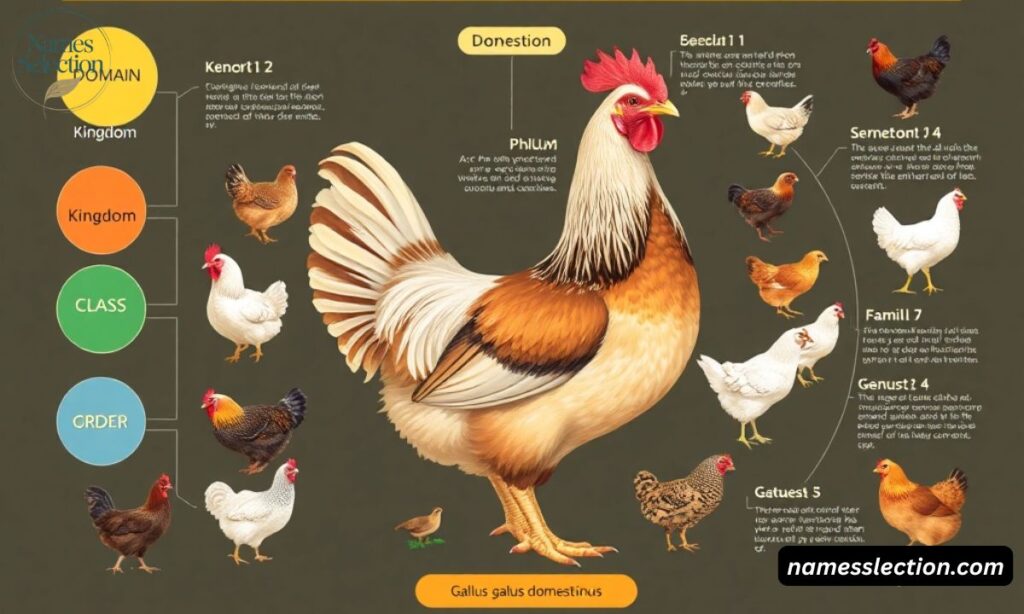
Chickens are classified using a global biological system called taxonomy. This system organizes living organisms from broad categories to specific ones.
Chicken Taxonomic Classification Table
| Classification Level | Scientific Name |
| Kingdom | Animalia |
| Phylum | Chordata |
| Class | Aves |
| Order | Galliformes |
| Family | Phasianidae |
| Genus | Gallus |
| Species | Gallus gallus |
| Subspecies | Gallus gallus domesticus |
This classification confirms that domestic chickens evolved from wild junglefowl species.
Understanding Chicken Scientific Name
Many people believe hens and roosters have different scientific names. In reality, all domestic chickens share the same scientific name.
Key points to understand:
- Gender does not affect scientific classification
- Breed does not change the scientific name
- All domestic chickens belong to one subspecies
Using the chicken scientific name avoids confusion caused by regional or common names.
Why Use Biological Names of Chicken?
Common names vary across regions and languages. For example:
- Chicken (English)
- Chook (Australia)
- Poule (French)
Scientific names provide a universal standard.
Benefits of Using Biological Names:
- Prevents confusion in research and farming
- Helps veterinarians diagnose diseases accurately
- Improves international communication
- Supports breeding and conservation programs
Using Gallus gallus domesticus ensures clarity worldwide.
Why is the Scientific Classification of Chickens Important?
Scientific classification helps scientists understand evolutionary relationships and genetic traits.
Importance of Chicken Classification:
- Shows connection to wild junglefowl
- Helps study poultry diseases
- Supports genetic diversity in breeding
- Improves agricultural productivity
- Assists conservation of wild relatives
Without classification, organizing poultry research would be extremely difficult.
Most Common Breeds of Chickens
Although chickens have hundreds of breeds, all share the same scientific name.
Popular Chicken Breeds:
- Leghorn – Excellent egg production
- Rhode Island Red – Dual-purpose (meat and eggs)
- Plymouth Rock – Hardy heritage breed
- Brahma – Large meat breed
- Silkie – Ornamental and pet-friendly
- Cornish – Used for broiler production
- Sussex – Adaptable dual-purpose breed
- Polish – Decorative crested chickens
Each breed is still classified as Gallus gallus domesticus.
Origin and Evolution of the Chicken Species
Chickens originated from the red junglefowl of Southeast Asia. Evidence suggests domestication began over 8,000 years ago.
Evolution Highlights:
- First domesticated in Southeast Asia
- Spread via trade routes to Europe and Africa
- Selective breeding improved egg and meat production
- Modern chickens are larger and more productive
The scientific name preserves this evolutionary history.
Difference Between Wild Junglefowl and Domestic Chicken
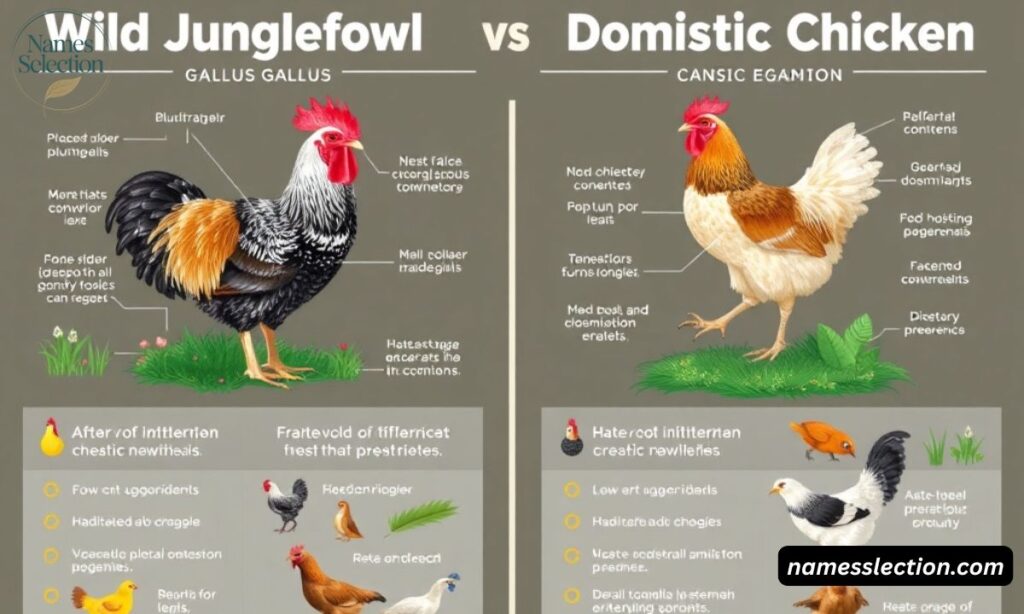
Although closely related, wild and domestic chickens show clear differences.
Comparison Table
| Feature | Wild Red Junglefowl | Domestic Chicken |
| Scientific Name | Gallus gallus | Gallus gallus domesticus |
| Flight Ability | Strong flier | Limited flight |
| Egg Production | 10–15/year | 200–300+/year |
| Size | Small and lean | Larger and heavier |
| Behavior | Shy and alert | Docile and friendly |
| Breeding | Seasonal | Year-round |
Uses of Chicken in Agriculture and Human Life
Chickens play a vital role in human society.
Common Uses of Chickens:
- Egg production
- Meat production
- Pest control in gardens
- Organic fertilizer (manure)
- Scientific research
- Pets and companionship
- Cultural and religious practices
- Educational farming programs
Chickens are one of the most valuable domesticated animals worldwide.
Last Words
The chicken scientific name Gallus gallus domesticus represents a universal system that connects modern chickens to their wild ancestors. Understanding chicken classification improves research, farming, and global communication.
Despite thousands of breeds and variations, all domestic chickens share the same biological identity. This scientific consistency highlights one of humanity’s most successful domestication stories.
Frequently Asked Questions
What is the scientific name?
The chicken’s scientific name is Gallus gallus domesticus.
What is the scientific name for a hen?
A hen’s scientific name is Gallus gallus domesticus.
Do roosters and hens have different scientific names?
No, both share the same scientific name.
What is the wild ancestor of chickens?
The red junglefowl (Gallus gallus).
Do chicken breeds have different scientific names?
No, all breeds belong to the same subspecies.

Charlotte, founder of Namesslection.com, shares her passion for creativity through Funny Names, Cute Names, and Other Names. She helps people find unique, fun, and meaningful names with ease.